A Family Mental Health Crisis: The Updated Guide to Choosing the Right Care Setting in Tel Aviv
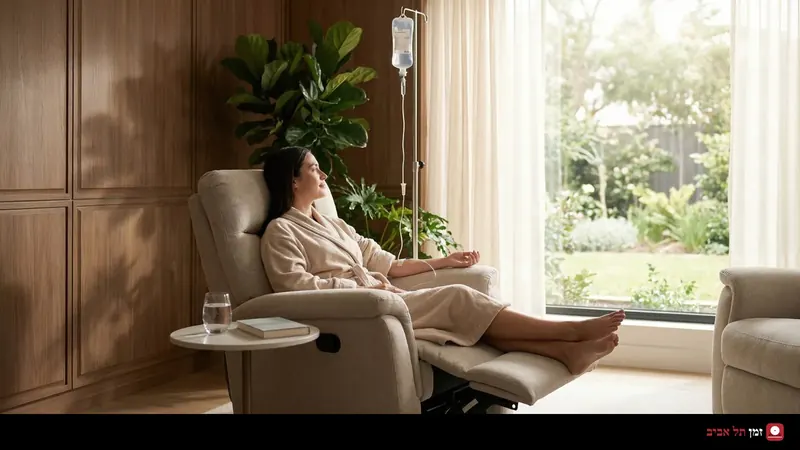
The phone rings at two in the morning, and the parents already know something has gone wrong. A family member going through a mental health crisis has not slept for three days, is talking too fast, and refuses to accept help. The first step that comes to mind is usually the same step that was standard twenty years ago: take them to the emergency room and begin a psychiatric hospitalization process. But in recent years, families in Tel Aviv and across the country have gained another option, one that offers medical stabilization and intensive treatment without going through a closed hospital ward.
What is a psychiatric hospitalization alternative, and when is it the right choice
A psychiatric hospitalization alternative is a private care setting that provides close medical, psychological and social support to someone going through an acute mental health crisis, without the patient entering involuntary or voluntary admission in a closed ward. Instead of an institutional environment, the patient stays in a calm, home like setting, with a care team available around the clock, alongside medication management that is set and monitored by a psychiatrist. This option suits mainly cases of severe depression, uncontrolled anxiety, a manic episode or a first psychotic crisis, where the patient is still able to cooperate with a treatment process outside hospital walls.
Why more families in Israel are looking at out of institution settings today
Israel's public mental health system works under heavy load, and psychiatric wards in the center of the country deal with long waits and a shortage of beds, especially around busy periods such as before the holidays or during the summer months. Families from Tel Aviv and the surrounding area, looking for a faster and more human response, often turn to checking private alternatives that offer quick admission, personal attention and a setting that does not resemble a closed medical institution. This matters especially to families worried about the social stigma that still surrounds psychiatric hospitalization, and who prefer that treatment take place away from public view.
Psychiatric hospitalization versus a home based alternative: the practical difference
The difference between the two paths is not only a matter of comfort. It directly affects the nature of the treatment, the pace of recovery and the sense of security felt by the patient and their family. The table below illustrates the main differences between institutional psychiatric hospitalization and a private alternative setting.
| Criterion | Institutional psychiatric hospitalization | Private hospitalization alternative |
|---|---|---|
| Care setting | Closed hospital ward | Private, calm residential home |
| Staff to patient ratio | Mostly group based, high load | Personal and close |
| Admission time | Subject to waiting lists and bed availability | Relatively fast |
| Family involvement | Limited to visiting hours | Ongoing guidance and involvement |
| Continuity after discharge | Depends on an outside referral | Usually part of one combined plan |
In some cases, patients move between these stages into a setting called a "balance house," which offers a combination of medical stabilization alongside emotional processing and building a new daily routine, as a step that bridges an acute crisis and a return to normal life.
What to check before choosing a mental health rehabilitation setting
Families reaching the point of decision tend to check a few key points before committing to a setting. It is important to check who the professional staff accompanying the patient are, whether a psychiatrist is regularly available, and what happens in case of a sudden worsening of the condition. A warning sign worth noticing is a setting that promises too quick a solution without an organized diagnostic process, or one that does not clearly present the professional background of its staff. It is also worth asking the provider direct questions: what the daily treatment plan looks like, what continuity looks like after the first stage ends, and what level of family involvement is expected. Settings such as Relife, for example, present a structured, staged treatment method, which makes it easier for the family to understand exactly what they are entering.
The leading criteria for choosing a mental health rehabilitation setting
As the supply of private settings grows, so does the need to know what to weigh when choosing correctly. Here are the five criteria worth checking before making a decision:
- Level of medical supervision: whether a psychiatrist accompanies the patient throughout the entire stay, not only at an initial visit.
- Balance between medication and emotional processing: a good setting does not settle for chemical stabilization alone, but also accompanies a deeper psychological process.
- A calming physical environment: a living space that feels like a home rather than an institution, with room for rest and a pleasant daily routine.
- Structured family support: ongoing updates and guidance for the family throughout the entire process, not only at the end.
- A continuity plan after discharge: a clear connection between the acute crisis stage and a gradual return to everyday life.
Questions and answers
What is the difference between a psychiatric hospitalization alternative and regular outpatient treatment?
Outpatient treatment takes place in time limited sessions, while a hospitalization alternative includes a full stay with close support around the clock. In most cases, it involves more acute crisis situations that require close medical supervision.
Is a hospitalization alternative suitable for all types of mental health crises?
Not necessarily. The setting suits mainly those who are still able to cooperate with a care team, and not situations that require physical restriction or continuous supervision that cannot be provided outside a hospital. An initial professional assessment determines the fit.
How long does a typical stay in an alternative setting last?
The length of stay varies according to the severity of the crisis and the patient's pace of progress, and generally ranges from a few weeks to several months. The plan is rebuilt along the way according to actual progress.
Who pays for a private psychiatric hospitalization alternative in Israel?
This is a private setting that the family covers the cost of, and it is sometimes possible to check partial participation from private insurance companies. It is worth checking in advance with the provider and the insurance company exactly what is covered.
How do you know it is time to turn to an out of home setting instead of waiting?
When there is rapid deterioration in daily functioning, significant sleep disruption, or risk of self harm, there is no point waiting for a public waiting list. Reaching out to a private setting early allows intervention before the crisis deepens.
A family that decides to look into an alternative to a closed ward does not have to do it alone. An initial consultation with a professional, even before the final decision is made, can save weeks of uncertainty and restore a sense of control to everyone around the crisis.