Menopause: What Is Really Happening in Your Body, and What You Can Do About It
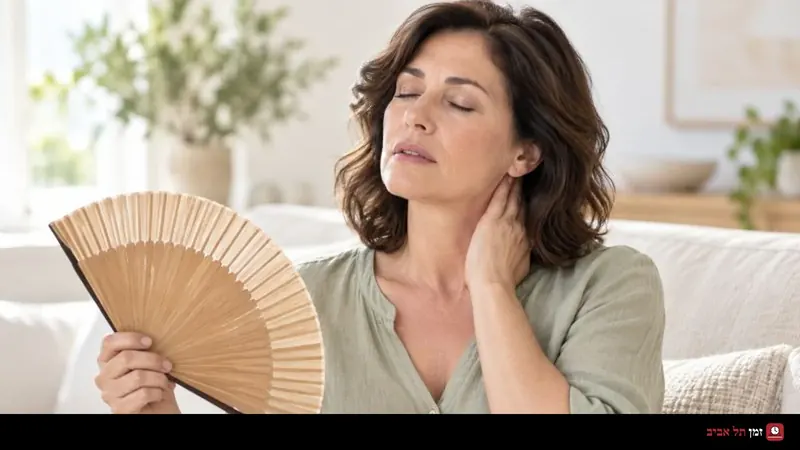
If you ended up here after another night of tossing and turning, night sweats and a pillow you keep flipping to the cool side, you are far from alone. Many women realize they are in menopause only in hindsight, after a few years of feeling that "something has changed and I don't understand what." So let's put things in order.
Menopause is a natural stage of life, not a disease. But natural does not mean you have to suffer, and when the symptoms start to disrupt your life, there is a lot that can be done.
How do you know this is it?
The medical definition is simple: menopause is the point at which 12 consecutive months have passed without a period, with no other explanation such as pregnancy, medication or a medical problem. For most women this happens between the ages of 45 and 55, at around 51 on average.
But the body starts changing years earlier. The stage in which the cycle suddenly gets shorter, longer or decides to surprise you is called perimenopause. The years after menopause are called postmenopause. It is worth knowing where you are on this timeline, because it affects which treatment will suit you.
The symptoms nobody told you about
Everyone has heard about hot flashes, but menopause symptoms are far more varied than you might think:
- Hot flashes and night sweats. These are the most common symptoms: about three in four women experience them around menopause, some of them quite intensely. They can also last a long time, with a median of about seven years.
- Broken sleep and fatigue. Sometimes because of the sweats, and sometimes because of the hormonal changes themselves.
- Mood, anxiety and "brain fog." The drop in estrogen affects mood, concentration and memory. It is not in your head, it is physiology.
- Vaginal dryness, lower desire and pain during sex. It is not easy to talk about, but there are good treatments for it.
- Weight changes. Fat tends to shift to the belly area, even when you have changed nothing in your diet.
- Urinary urgency and recurring urinary tract infections. They are more common than people think, and worth mentioning to your doctor.
What is happening inside?
The ovaries gradually slow their production of estrogen and progesterone, and that is what triggers most of the symptoms. There is also a quieter side worth knowing about: a long-term lack of estrogen affects the bones, the heart and the blood vessels, and the rate of bone loss speeds up in the years after menopause. That is why a bone density test, physical activity that suits you and medical follow-up are part of the picture. Treatment is not only about hot flashes.
When not to wait and to book an appointment
- When symptoms affect your quality of life or your sleep. That is a good enough reason.
- When there is bleeding after a year without a period. Bleeding like this always needs to be checked, and should not be put off.
- When menopause arrives before the age of 45. In this case tailored treatment and follow-up may be needed.
So what can you do? More than you think
For hot flashes and night sweats: hormone therapy (HRT) is still the most effective option. It comes in several forms, pills, skin patches and gel, so you can find what is comfortable for you. If you have had a hysterectomy, estrogen alone is usually enough. If you have a uterus, progesterone is added to protect the uterine lining, and one of the options for this is a hormonal intrauterine device.
Can't take hormones, or don't want to? There are also non-hormonal treatments. Among them are relatively new medications that act directly on the heat-regulation center in the brain, as well as older medications that have been found to reduce hot flashes.
For dryness, burning and pain, and also for urinary symptoms: a local low-dose treatment fits here, vaginal estrogen in the form of a cream, vaginal tablets or a ring. This is a separate treatment from HRT, and the two can be combined as needed. Dedicated moisturizers and lubricants can also help.
What else helps? Cognitive behavioral therapy (CBT) has been found to reduce the frequency and intensity of hot flashes, and to improve sleep and mood. Small changes make a difference too: less coffee and alcohol in the evening, layers that are easy to take off, and regular physical activity.
And what about supplements that promise a "natural solution for menopause"? It is wise to be careful. The evidence for effectiveness and safety varies greatly from product to product, so it is important to tell your doctor before you start.
The bottom line
"Suffering in silence" is not a plan. Many women carry years of sleepless nights, ups and downs in mood and symptoms they are embarrassed to mention, only because they are convinced that "that's just how it is at this age." It does not have to be that way. Which treatment, at what dose and for how long is a personal decision, one worth making together with a doctor who specializes in menopause.
Want to go deeper? On the Queen Clinic website you will find a comprehensive guide to menopause, with information on symptoms, diagnosis and treatment options. The guide was written and reviewed by Dr. Guy Gutman, an obstetrician-gynecologist and specialist in gynecology.