A hidden leak in a Tel Aviv apartment: the signs worth spotting early
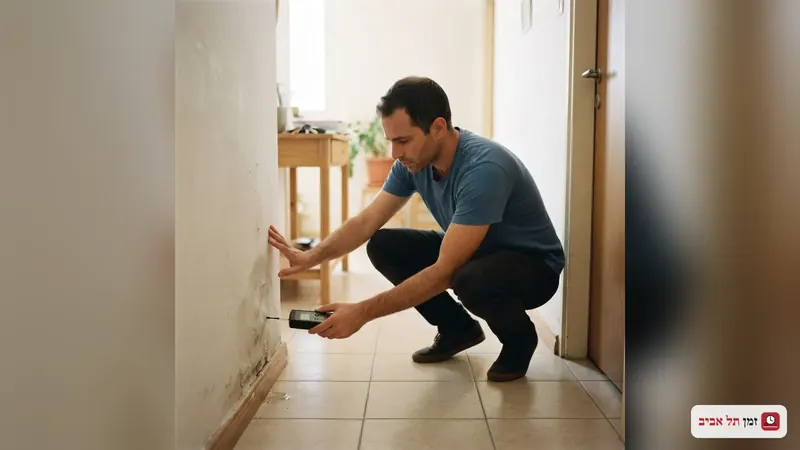
A stain that keeps coming back on a wall, or an unexplained rise in water consumption, is worth looking into. What can you check yourself, when is it worth calling a professional, and why is a fresh coat of paint not enough?
A hidden leak does not always start with a puddle. Sometimes the first sign is a little peeling near the skirting boards, a musty smell in a cupboard or a stain on the ceiling that gradually spreads. Water can travel inside building materials, so the place where the damp appears is not necessarily the place where the fault began.
In an apartment building in Tel Aviv, the source of the damp may be in the apartment's own pipes, in a shared system or in a neighboring apartment. Renovations carried out over the years that moved the kitchen or the bathroom can make it harder to understand the route the pipes take. Before opening a wall or lifting tiles, it is worth gathering information and working out what is causing the problem.
Which signs justify a check?
Damp stains, blistering paint and peeling plaster may point to water getting in. A musty smell that keeps returning to a room, or persistent moisture under a sink, also deserve attention. That said, these signs do not prove there is a leaking pipe: condensation on cold surfaces or a waterproofing failure can produce similar effects.
Another sign is a rise in water consumption with no clear explanation. It is worth comparing periods by consumption in cubic meters and the number of billing days, and not only by the amount to pay. A change in the number of occupants, guests or watering may explain the gap; when habits have not changed, there is reason to check.
What can you check without taking anything apart?
First, it is worth checking the visible connections under the sinks, next to the washing machine and around the toilets. Sometimes the water loss comes from a dripping connection or from a cistern that keeps running water into the bowl, and not from a leak inside the wall.
You can also watch the apartment's water meter when all the taps are closed, the cisterns have finished filling and no appliance or irrigation system is using water. If the meter keeps showing flow, there is reason to find out where the water is going. This check does not identify the location of the fault and does not prove that it is a hidden leak.
Equally, a meter that shows no flow does not rule out every damp problem. A leak from a drain pipe may occur only while it is in use, and rainwater getting in or condensation does not show up in the apartment's water consumption.
The timing of the stain can help you understand the source
It is worth noticing when the damp gets worse: after a shower, after rain or even when the room is not in use. It is important to record where it is as well: near a window, on the ceiling or on the lower part of the wall. A dated photograph and a description of the changes can help with the inquiry.
In a rented apartment it is advisable to update the landlord, and where a shared source or a neighboring apartment is suspected it is worth involving the building committee or the neighbors as appropriate. At this stage it is better to focus on the findings, without deciding in advance who is responsible. Painting over an active stain may hide it for a short time, but will not deal with the cause.
How is professional leak detection carried out?
The professional chooses the tests according to the signs and the system under suspicion. A thermal camera can help identify temperature differences on the surface; it does not see through walls, and a thermal finding needs interpretation and sometimes further tests. Depending on the case, moisture measurement, pressure tests or other detection methods can be added.
For anyone who wants to understand which tests may be suitable, the page on water leak detection in Tel Aviv on Oren Rada's site sets out detection methods and treatment options. Before ordering the service it is worth finding out what the inspection includes, whether you receive documentation of the findings and whether the price covers detection only or the repair as well.
After the repair: making sure the area is ready to restore
Finding the source, repairing the fault and drying the area are separate stages. Even after the leak has been stopped, moisture can remain in the wall or under the flooring. Before closing up the area and renewing plaster or paint, it is worth making sure the cause has been dealt with and that the base is dry enough for the finishing work.
When a new stain appears, the first step is to photograph it, notice when it changes and check whether there is a visible source of water. An orderly inquiry before a cosmetic repair can reduce unnecessary dismantling and save a return to the same problem.