A wedding for 600 guests: how to plan a large event that doesn't feel like a crowd
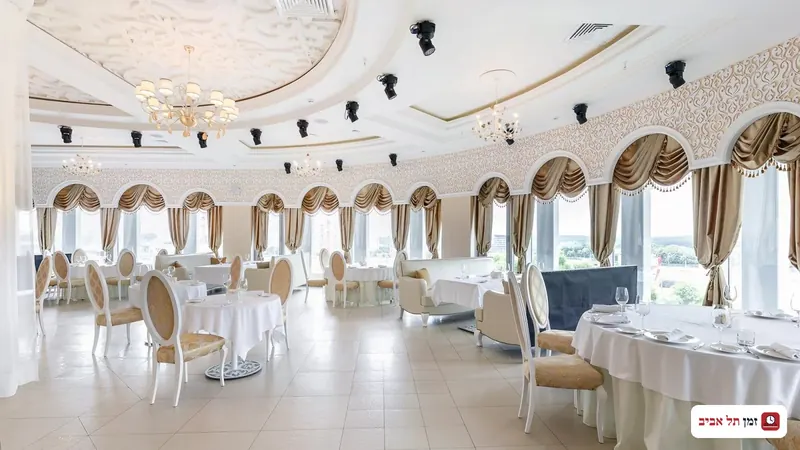
Picture a hall filled to capacity, hundreds of guests arriving in under an hour, and a chef who has to serve a hot dish to all of them at the same time. That is exactly the challenge facing every couple who decides to hold an event on this scale, and it is fundamentally different from planning an ordinary wedding. The more guests there are, the greater the need for precise planning, orderly logistics and a venue that really knows how to handle that many people without anyone feeling lost.
What exactly is a wedding for 600 guests?
A wedding for 600 guests is an event where the number of invitees is well above the national average, so it calls for a venue with suitable infrastructure: extensive parking, several food stations, a large serving team and a sound system that covers the whole area. In practice it is an entirely separate kind of event in terms of planning, because every detail, from the seating arrangements to the pace at which the dishes are served, has to be planned so that it works on a large scale without losing the intimacy of the moment.
Why many couples choose such a large event
Families with many children, close-knit communities or couples with a wide social background sometimes find themselves with a guest list approaching 600 people without any particular intention of overdoing it. It is not necessarily a decision about grandeur, but a natural result of wide circles of friends and family. In Israel, especially in the centre of the country, there is growing demand for halls and gardens that can host such numbers without compromising on the level of service or the quality of the food.
The criteria worth checking in 2027 before choosing a venue for a very large event
Choosing the right venue is the most significant decision in the process, so it is worth checking a few key points before signing:
- Real capacity, not an estimate: make sure the venue presents an approved safety standard for the exact number of guests, and not "a maximum number at a squeeze".
- Parking and transport: enough parking space or an organized shuttle service, to prevent congestion and chaos at the entrance.
- Serving staff: a number of waiters and food stations that matches the number of guests, so that service is not delayed.
- Sound and lighting systems: equipment that covers the whole area of the hall or garden evenly, including distant seating corners.
- Flexibility in the menu: the option of kosher, vegetarian and vegan adjustments for a large and varied crowd.
- Proven experience with events of a similar size: ask for examples or look at photos from previous events of exactly the same size.
This is exactly the context in which a wedding for 600 guests calls for a venue that has already proved it knows how to handle that scale, and not a hall that is trying to "practise" on your wedding.
A small hall versus a hall for a very large event: what really changes
| Criterion | Hall for up to 250 guests | Hall for 600 guests |
|---|---|---|
| Parking space required | Limited, usually enough | A large car park or organized shuttles |
| Serving team | A small team, one or two stations | Several food stations and an expanded team |
| Length of the reception | Short, all the guests arrive relatively quickly | Longer, entry needs to be planned in stages |
| Seating arrangements | Relatively simple | An orderly system to prevent confusion and queues |
| Average budget | Lower | Higher, though the cost per guest can be similar |
What guests and couples actually check before booking a venue
Beyond the price, most couples look at a few practical signs: how long it takes to get an answer from the venue, whether there is a dedicated event coordinator on the wedding day, and whether a list of recommendations is available from couples who have already married there on a similar scale. A common warning sign is a venue that avoids giving an exact number of seats or does not present a detailed menu in advance. It is also worth asking in advance what happens in the event of rain or extreme heat, since the wedding season in Israel includes both heatwave months and a short but stormy winter, so a backup plan is not a luxury but a necessity.
How to turn a large event into a personal experience for every guest
The real challenge at an event of this size is keeping a sense of closeness despite the numbers. Solutions that work in practice include dividing the seating into areas by social group, food stations spread around the space to prevent long queues, and lighting that divides the large area into more intimate corners. Experienced event teams, such as those working at Sera Events, plan the guests' route through the space in advance so that even someone sitting at the far end of the hall feels part of the celebration and not a spectator on the sidelines.
Questions and answers
How far in advance should a hall for a large wedding be booked?
It is recommended to book a venue at least eight to twelve months in advance, especially for a sought-after date such as the end of summer or before Passover. Large halls are taken faster because the number of couples looking for them is relatively small.
How much does a wedding for 600 guests cost on average in Israel?
The cost varies with the level of the menu, the location and the season, but it is usually in the range of hundreds of thousands of shekels including catering, sound and design. It is worth asking for a detailed price quote per guest in order to compare venues fairly.
How do you deal with guests arriving late at an event like this?
Proper planning includes an extended reception and several entry points, so that even those who arrive late do not create congestion at the door. Some venues also offer an indoor navigation app or clear signage that directs the guests.
Can a large wedding be held outdoors, in an event garden?
Yes, and it is definitely recommended, provided there is a covered backup solution in case of strong wind or rain. Large gardens allow a natural division into areas, which makes a sense of intimacy easier even with a large number of guests.
What is the main difference between producing a business event and producing a wedding on a similar scale?
At a business event the emphasis is usually on a fixed schedule and central content such as lectures, while at a wedding the emphasis is on a social experience and flexibility with timings. Even so, both kinds require the same level of logistical precision when a large number of guests is involved.
The first practical step is not choosing a menu or a design, but making sure the venue itself can carry that number without compromise. All the other decisions are built on that foundation.