Tel Aviv Programme Connects Local Businesses With Families This November
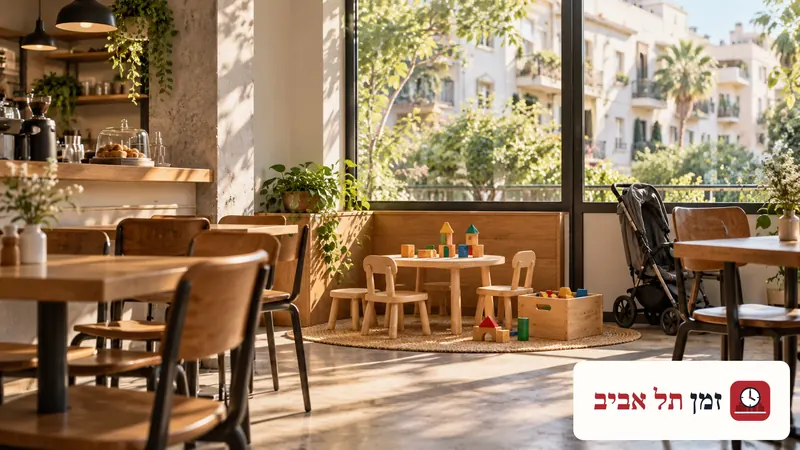
Tel Aviv-Yafo is bringing early-childhood activities into local businesses through a municipal programme listed for 1 November to 30 December 2026. Called Taf-nit Iskit in Hebrew, the initiative connects neighbourhood commerce with parent-and-child sessions and meetings for parents on parental leave.
The municipal events listings mark the programme as free. A detailed schedule published by the local news site Telavivi says advance registration is required and places are limited. For families, the practical distinction is between a free scheduled activity and anything they choose to purchase at the host business. For local commerce, the programme creates a setting for contact with neighbourhood families, without establishing that it will increase sales.
The initiative is promoted by the municipality's business development authority and Urban95, according to Telavivi's report. It is a current municipal business programme with a family audience, rather than a recommendation to buy from any participating venue.
A citywide programme, not one event at City Hall
The municipal calendar gives the overall period as 1 November to 30 December 2026 and describes the location as across the city. Its listing also carries Ibn Gabirol 69, the municipal address. That should not be treated as the destination for every session: the detailed programme reported locally identifies separate neighbourhood addresses.
The reported formats include shared activities for parents and young children, parent circles during parental leave, and play corners within businesses. The distinction between formats matters. An organised session has a date and starting time; the mention of a play corner does not establish an unlimited supervised childcare service.
The published programme combines family activity with existing commercial premises. That means a family should check the details of the specific session it books rather than assume that every location offers the same activity, hours or facilities. The general date range is the programme's span, not a promise of daily sessions throughout it.
The November and December dates reported so far
Telavivi's published schedule identifies an active storytelling session for parent and child at 5 Almagor Street on 1, 8 and 15 November, from 16:30 to 17:30. It also lists joint movement sessions at 31 Yedidia Frenkel Street in Florentin on 3, 10 and 17 November, at the same hours. Check the precise address and entrance in the booking confirmation before travelling.
For parents on parental leave, the report lists meetings at 57 Yehuda HaMaccabi Street on 15, 22 and 29 November, from 09:30 to 11:00. Another set is listed at 20 Sderot HaHaskala on 16, 23 and 30 November, also from 09:30 to 11:00.
The December sequence in that report is at 16 HaArba'a Street on 14, 21 and 28 December, from 09:30 to 11:00. The parent-circle subjects are infant sleep, communication at home and family atmosphere, in that order across each three-meeting sequence.
These session-level details are attributed to the local report; the municipal listings independently confirm the programme and its overall date range. The presence of a date in a published schedule does not establish that places remain available today. Use the municipality's date-specific registration information to confirm the session before making travel arrangements.
What families need to check before registering
Telavivi reports that registration for meetings from 15 November onwards is scheduled to open on 1 November. That is an opening date for those later meetings, not confirmation that registration has already opened for every activity. The report states that participation requires advance registration and that capacity is limited.
Check the age range for the chosen session, whether the registration covers the adult and child together, and the actual attendance conditions. The sources checked for this article did not establish one precise age band covering every format. Early childhood is the general audience description, not a substitute for the conditions of a particular activity.
Families should also ask about step-free entry, stroller space, seating and any facility they need. Those are practical checks, not claims that every participating business has identical arrangements. If a session involves movement, confirm what participants need to bring and how the adult is expected to take part.
No English-language delivery was confirmed in the material checked. English-speaking parents can still use the same dates and addresses, but should establish the session language before booking if it affects participation. An English description of a programme does not mean that the underlying activity is conducted in English.
How the programme connects families and local commerce
The business angle is the use of an existing neighbourhood venue as a meeting point. A family may visit for a session and become familiar with a place it had previously passed. That is an explanation of the opportunity created by the format, not a claim about actual customer behaviour or sales.
For a business, hosting also raises practical questions about space, timing and the relationship between ordinary service and the organised activity. Clear information can help families distinguish the event from the venue's usual commercial offer. This article does not name or rank providers, and it makes no recommendation about optional purchases.
No programme budget, attendance total or measured effect on business income was confirmed in the sources examined. Those figures should be assessed separately if the city publishes them. A useful later evaluation would distinguish participation in the activities from transactions and repeat visits, rather than treating them as the same outcome.
A free activity still needs a workable family plan
Start with the session that suits the child's needs and the adult's timetable, then check the journey to that specific address. The municipal address in the general listing is not enough for route planning. Current public-transport information and the registration confirmation are the appropriate practical references for the trip.
Keep optional purchases separate from the activity budget. The programme is listed as free; that does not mean all products sold at host businesses are free. No universal purchase requirement was confirmed, so families should read the particular booking conditions rather than infer one either way.
The immediate development is a November and December programme that places family activity inside neighbourhood commerce. The next useful step is specific: confirm the date, location, language, eligibility and available place for the session that fits. That gives residents a way to use the initiative while leaving its wider economic results to be measured.