Cyrus Capital's Rafi Kashkash: The Housing Crisis Will Outlast Any Change of Government, So Policy Must Too
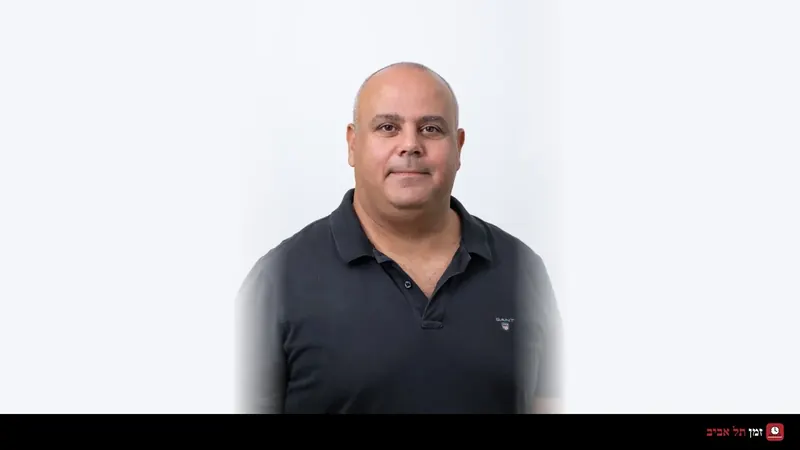
With the Knesset elections approaching, housing is once again near the top of the parties' agendas. Rafi Kashkash, VP of Development at Cyrus Capital, a company focused on urban renewal, points out that the problem does not disappear when the polls close: whoever sits in the next government will find it exactly where it was.
Promises that keep coming back
According to Kashkash, almost every campaign offers the same list: more apartments on the market, lower prices and less red tape. New plans and reforms with fresh names are then announced, but in his view, anyone actually trying to move a project forward still gets stuck in paperwork, in lengthy planning and permitting, in missing infrastructure and in economic uncertainty.
A political clock versus a project clock
Kashkash highlights the gap between the pace of politics and the pace of urban renewal. A government usually lasts a few years, while a project of this kind can take many years, sometimes more than a decade. Along the way the residents have to be brought together, plans drawn up, approvals and a building permit obtained, financing closed, and the homes built and handed over. Hence his conclusion: housing cannot be a seasonal issue that surfaces only around election time. In his view it needs a steady policy line that continues even when the government changes.
What to count when measuring success
According to Kashkash, the next government, whatever its makeup, should treat housing as a long-term national goal. He believes there is little point in boasting only about the number of housing units approved in plans. The right measure, he says, is how many of them received a permit, how many went into construction and how many were handed over to residents. Between an approved plan and the start of work on site stand permitting, infrastructure and financing, and as he puts it, apartments that exist only on paper do not yet put a roof over anyone's head.
The periphery, local authorities and who is responsible for delivery
Another point Kashkash raises is the gap between central Israel and the periphery. In the center, land prices allow the market to drive many projects on its own. In the north and the south, precisely where the need for protected spaces and for reinforcing buildings is more pressing, many projects cannot justify themselves financially. In his view, a family in Kiryat Shmona or Tiberias needs a safe room no less than a family in the center, so the state should fill the gap with tools such as grants, additional land, tax relief and infrastructure funding.
Kashkash also stresses the position of local authorities. Urban renewal, he explains, brings a neighborhood not only apartments but also children who need classrooms and kindergartens, more users of public transport and growing demand for municipal services and public spaces. A city cannot be expected to approve thousands of homes without receiving the budget and staff it needs to serve the new residents. He therefore recommends building urban renewal into the national "umbrella agreements" with cities and pairing it with investment in infrastructure and public buildings.
In his view, Israel does not lack bodies that deal with housing. The difficulty is the number of stages and players, and the fact that it is not always clear who is responsible when a project stalls. He suggests that the next government appoint a single authority to oversee delivery, identify obstacles and make sure that progress in planning is not halted by a delay in budgets, infrastructure or permitting.
What is expected of elected officials
Ahead of the elections, Kashkash is not looking for magic solutions from the candidates. As he sees it, they should present a plan that keeps running after a change of government, and be judged by what actually gets built. A crisis that accumulated over years will not be solved in a single term, he concludes, but it is at least possible to stop starting the whole process from scratch every time.