Jaffa farmers market marks its first year with rotating stalls
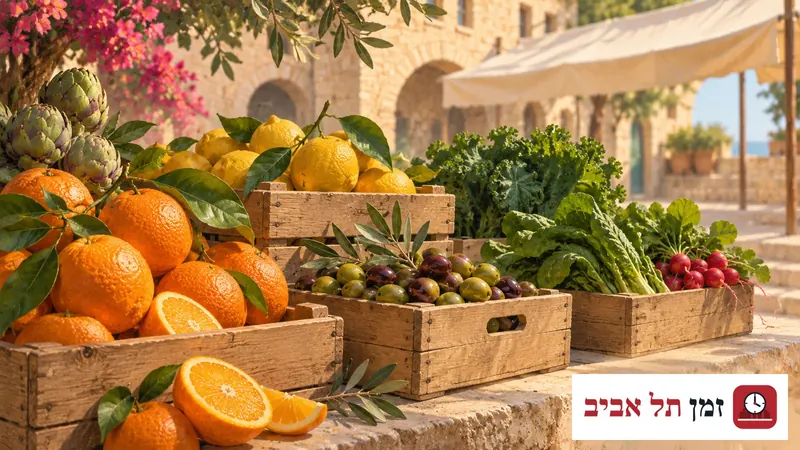
The farmers market in Jaffa's Flea Market district is reaching its first anniversary with a mix of regular and rotating stalls. In a report published on October 21, 2026, Calcalist said 150 producers and growers had participated during the year, with almost 30 stalls operating each week. Those are figures reported about the initiative, rather than an independently audited municipal count.
November listings also describe anniversary activity. However, the published opening hours conflict, and a definitive timetable could not be confirmed. This article covers the market's development and what residents can learn from it. Before travelling, obtain the specific session's hours, location and participation conditions from its organisers.
An annual total is not a weekly shopping list
The figure of 150 producers and growers covers the past year. It does not mean that 150 stalls will be present at a single visit. Calcalist reported almost 30 weekly stalls, with more than a third participating regularly. Other participants can change, so finding a product on one visit does not guarantee it will be available the next time.
That distinction is useful for residents. The market combines continuity with rotation, rather than bringing every past participant together for one event. Someone shopping for a particular ingredient can check the current participants first. Someone interested in discovering produce can allow for a changing selection. A historical list of vendors should never be read as a current inventory.
The reported participation figures provide no comparable measure of sales, household savings or the price of a shopping basket. Nor do they establish how much visitors spent. Their narrower meaning is that the market has accommodated more producers across the year than appear in any one weekly edition. That is a description of its structure, not a claim about its economic impact.
Food shopping within an established urban district
Calcalist describes the market as a private initiative by Niv Tubul developed with municipal involvement. It identifies Lotem Erez as the curator selecting participants. The report places the stalls in the open space near Amiad Street within the Flea Market district. This is recurring activity fitted into an existing urban setting, with an organised selection of participants, rather than a permanent food shop or a collection of every producer who has applied.
For a resident, buying ingredients to take home and purchasing something to eat during a visit serve different purposes. Both may be available in the same setting, but they belong to different parts of a budget. Vegetables for the week and an evening meal are not equivalent purchases simply because they are bought on the same outing.
The word "local" also needs precision. Food sold in Jaffa has not necessarily been grown in Jaffa. If origin matters, ask where the item was produced or grown and who is selling it. Participation in a market does not, by itself, certify a production method, an ingredient claim or a particular standard for every product on a stall.
A market story within a wider city food policy
The municipality also publishes a broader food policy under its Beteavon programme. Its official page describes support for neighbourhood food activities, community kitchens and reducing food waste. These are citywide policy strands, not evidence of a particular stall's standards or the market's sales. The distinction gives the anniversary a useful setting: food can enter local public life through production, shared activity and household purchasing, each requiring its own evidence when results are claimed.
Price comparisons need comparable quantities. A box price cannot be compared with a price per kilogram until the contents are known. A prepared item is also different from its raw ingredients. This article includes no price survey and therefore makes no claim that the market is cheaper or more expensive than other shopping options in the city.
People who need ingredient information, dietary suitability or a particular certification should seek a clear answer about the item itself. The character of an event cannot supply that answer. Payment methods and proof of purchase are also worth checking at the stall. These are practical questions for a seller, rather than features that can be attributed to every participant in advance.
What can be said about November
Activity listings identify November as the market's anniversary month. A complete primary-source timetable, current opening hours and participation conditions could not be read and confirmed. Consequently, this story does not reproduce a day-by-day programme or promise a particular activity or price on which readers could base a journey.
Check the actual session you intend to visit, rather than relying on recognition of the market's name. Establish whether an address is the activity's location or a general reference for the surrounding district. Once the arrival point and hours are confirmed, use them to plan the current route and the journey home.
Readers travelling with a pushchair, shopping equipment or accessibility requirements should establish the approach and access arrangements beforehand. No particular accessible route, seating provision or parking arrangement has been confirmed here. That preparation concerns the use of the space; it does not require choosing a stall or committing to a purchase before arrival.
Reading the anniversary as a neighbourhood development
A first anniversary makes it possible to describe the market as recurring urban activity: what stays consistent, what rotates and what residents need to know before using it. The reported weekly stall count and annual participant total describe the supply structure. They do not prove a change in household spending, residents' incomes or surrounding businesses' results.
Residents can make the outing more useful by identifying its purpose. Buying specific items calls for an availability check. Comparing produce calls for quantity and price information. Joining an associated activity requires its own confirmed hours and conditions. These purposes can coexist, but they should not be merged into a single promise about what every visit will deliver.
The final check before leaving should be concrete: the session is taking place, its time and location match, and the details relied upon have been confirmed by the organisers. The anniversary supplies a clear news peg. A purchase should still be based on what is actually offered that day, with the product's price and information in view.