When home is no longer enough
There is a moment when a family understands it cannot carry on alone. Someone close has fallen into addiction, to alcohol, prescription medication or another substance, and conversations at home no longer help. In Tel Aviv, a city where the pace of life is fast and economic and social pressure is always present, the phenomenon is not unfamiliar. Families who reach this stage mostly ask one question: where do you turn when you want serious, private and immediate treatment, without waiting in line and without compromising on the quality of care.
The decision to seek private treatment usually comes after a long period of attempts at home, difficult conversations and efforts at self-directed withdrawal that did not succeed. That understanding, that the problem calls for a professional framework and not just willpower, is already a significant step in itself, and from there the way forward runs through an informed choice of the right place.
What is a private rehab center
A private rehab center is a closed treatment framework funded by the patient or their family, offering a process of withdrawal and recovery from addiction under close medical and therapeutic supervision, in contrast to public detox wards where the wait is long and the attention less personal. The framework usually includes a controlled detox stage, individual and group psychological therapy, and a follow-on rehabilitation program, all under one roof and mostly in a compound designed specifically to create a sense of safety and calm.
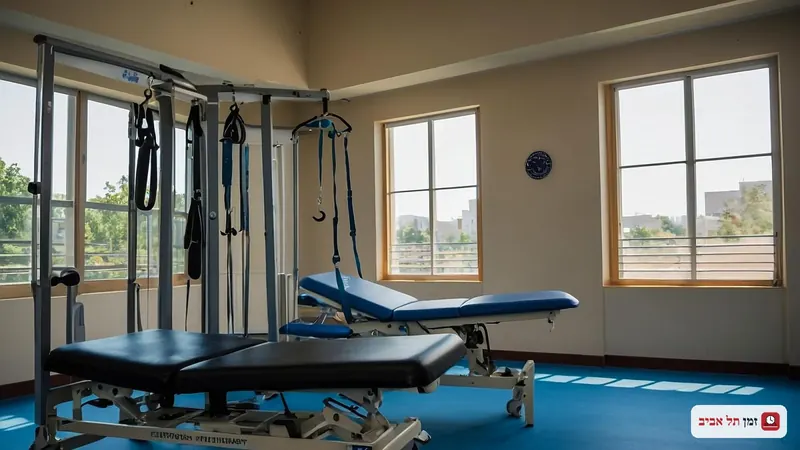
Unlike the common image of a "closed institution", a modern private rehab center today looks more like a health and wellness center, with private rooms, shared seating areas and an environment that encourages conversation and not isolation. That difference in design and atmosphere directly affects the patient's willingness to stay in the process to the end.
Private rehab center versus a public detox ward
The differences between the two options directly affect the pace of recovery and the chance of avoiding relapse. The table below brings together the main criteria families check before making a decision.
| Criterion | Private rehab center | Public ward |
|---|---|---|
| Waiting time for admission | Usually a few days, sometimes immediate entry | Weeks to months |
| Staff attention per patient | Personal, with staff assigned closely to each patient | Limited, with a heavy load on staff |
| Treatment environment | Private compound, adapted rooms, spaces for calm | A ward in a general hospital |
| Continuity of care | A personal program from detox through rehabilitation | Mostly ends at the detox stage |
| Cost | Private funding, payment plans | Funded by the health basket |
It is important to stress that the higher cost of the private route in practice buys access to immediate treatment, and quite often that is the difference between reaching out for help at the moment of crisis and a wait during which the situation gets worse. Many families also look into a payment plan with the center itself, which eases the financial decision.
What characterizes a leading rehab center
The field of private rehab in Israel is developing, and many centers are upgrading themselves to fit patients' changing needs. This is how to recognize a framework that is truly advanced and not merely marketing itself as one.
- A personally tailored treatment program, built according to the type of addiction and the patient's medical and mental health history, and not a uniform template for everyone.
- An available multidisciplinary team, including doctors, psychiatrists, social workers and therapists, with a presence outside regular working hours as well.
- Varied physical spaces, which allow for treatment and for rest, physical activity and even remote work for those who need continuity of employment.
- Full transparency with the family, including regular updates and involvement in the recovery process, not only at the admission stage.
- A follow-on program after discharge, which accompanies the patient back into routine and significantly reduces the risk of relapse.
Networks such as E-zone REHAB, for example, have built their compounds around exactly this division, with separate areas for rest, for treatment and for day-to-day activity, so that the patient experiences a structured process and not just a technical hospitalization.
How to choose well before you sign
Many families arrive under time pressure and give up on a thorough check, and that is a mistake that can prove costly. Before choosing a private rehab center it is worth finding out who makes up the medical team, what the detox stage includes, whether there is a follow-on rehabilitation program and for how long, and exactly what the monthly payment covers. Simple questions like these save disappointments in the middle of the process, at a time when the family is already under great strain.
It is also worth visiting the place before making a final decision, speaking with a member of staff and not only with a sales representative, and seeing what a routine day in the compound looks like. A direct impression of the atmosphere and the way people are treated usually says more than any marketing brochure.
Warning signs worth paying attention to
A compound that refuses to show the family the place before admission, staff who do not present clear qualifications, or a generic treatment program that does not change from one patient to the next: all of these are signs that justify a further check before signing an agreement.
How to motivate an addicted person to seek help
Sometimes the greatest difficulty is not finding a suitable framework but persuading the addicted person themselves to agree to treatment. A conversation that focuses on concern and not on blame, coordination with a professional who will accompany the conversation, and an early look at the options together with the family significantly increase the chance that the decision will be made willingly and not under coercion.
It is advisable to avoid ultimatums at the first moment, and to present the approach to a center as a shared step, not as a punishment. When the addicted person feels the family is at their side and not against them, the chance that they will agree to begin the process rises significantly.
Questions and answers
How long does a rehab process at a private center take?
The length of treatment varies according to the type and severity of the addiction, but it is usually a period of four to eight weeks for the initial stage, followed by a flexible follow-on program that can last further months.
Can private rehab be funded through health insurance?
Some supplementary insurance policies and private health insurance plans cover part of the cost, so it is worth checking in advance with the insurance company and with the center itself what is covered and what is not.
What is the difference between detox and rehabilitation?
Detox is the initial stage in which the body is freed of the substance under medical supervision, while rehabilitation is the longer mental and behavioral process whose aim is to prevent a return to addiction.
Can the family be involved in the process?
Yes, most private centers encourage family involvement, including counseling sessions for the family and coordinated visits, because close support significantly improves the chances of recovery.
What happens after the program at the center ends?
After discharge, patients usually continue with regular follow-up, support groups and individual therapy, in order to sustain the change and rebuild a stable routine far from the addictive substance.
What to do with this information now
If this concerns someone close to you, the next step is not to wait for another moment of crisis but to contact a suitable center and look into the options in practice, including an initial consultation, which is usually offered without commitment. The earlier the approach, the easier it is to build an orderly treatment process and not a reactive one.