Borrowing equipment in Tel Aviv: how to reserve, collect and return it
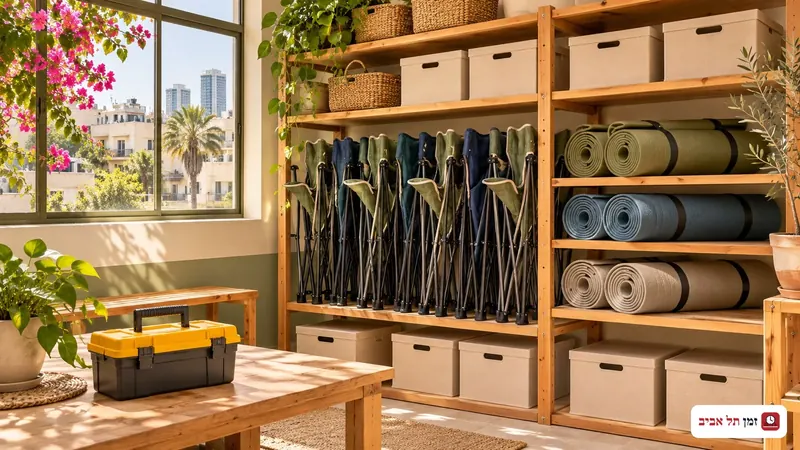
Before buying equipment for a gathering, a trip or a small job at home, check whether a neighbourhood lending store in Tel Aviv can meet the need. Start with three details: who is eligible, whether the item is available for your dates, and how you will complete both collection and return. A photograph in a catalogue is not a confirmed reservation.
These stores operate differently. Some serve particular neighbourhoods, handover hours vary, and a current service notice can override regular hours printed further down the same page. This guide follows the practical sequence: define a need, check conditions, reserve, collect and return. It does not promise that every item is available or that every store accepts every resident.
The local information was checked on operators’ websites on November 28, 2026. Shared equipment can be useful, but each loan has its own arrangements. Begin with one straightforward item, learn how the relevant store works, then consider a larger reservation or an event relying on several borrowed pieces.
Define the job before searching for an object
Write down what you want to do rather than simply naming something you might buy. A meal in a garden could require a table, crockery or a way to transport everything. A day outdoors might need a mat rather than a tent. A short description helps narrow the search and gives the operator a question that can be answered.
Separate essentials from useful extras. If your activity cannot happen without an item, do not rely on it until the reservation is confirmed. For an optional addition, prepare a smaller version of the plan. This is not a judgement about service quality. It is a practical response to a shared stock of objects that may serve different households on neighbouring dates.
Consider the whole borrowing period, not just the hours of use. Equipment for an evening event may arrive several days beforehand and remain until the next return window. You need somewhere suitable to store it, time for cleaning and a way to bring it back. A low advertised price does not remove those practical demands.
For tools, ask whether you know how to use that particular item safely. Being able to reserve it is not training. Request suitable instructions and avoid a task outside your ability. A simpler tool or professional help may be more appropriate than turning a small home project into an experiment with unfamiliar equipment.
Check the service area and the current operating notice
Eliyahu’s lending store says it serves Yad Eliyahu, Tel Haim, Bitzaron and Ramat Israel. Its website includes camping, hosting and household tools, and asks users to choose dates to see availability. Opening the catalogue does not itself establish eligibility. Check the service area before spending time building a reservation you may not be able to use.
Hefziba describes a neighbourhood community initiative beside the Yossi Banai community centre at 22 Dam Hamaccabim Street. Its website advertises week-long loans, online ordering and collection during opening hours. New residents can ask what joining involves and which information is required. Avoid sending personal documents through a channel the operator has not asked you to use.
The Yo-Yo website offers a useful example of why the latest notice matters. A banner says the store is undergoing renovation and lending is suspended until further notice, although regular hours still appear below. Do not use those hours as evidence that borrowing has resumed. No reopening date was established during these checks.
A map entry, an older questions page and a working catalogue provide different pieces of information. First check the operating notice, then eligibility, then the actual reservation. If details conflict, send a short enquiry naming the item and dates. Keep an alternative plan until there is a clear answer.
Fit both ends of the loan into your calendar
Eliyahu’s published schedule separates returns from collection. On Mondays and Thursdays, returns are listed for 8.30pm to 9pm and collection for 9pm to 9.30pm. The store describes half-week or full-week loans. Confirm the appointment with the reservation, particularly around holidays or changes in activity, rather than treating the general timetable as a personal booking.
Hefziba lists Mondays and Thursdays from 6pm to 8pm. That does not mean its prices, procedures or loan periods match another store. Choose an eligible service you can reach at both ends of the loan. A convenient outward trip does not solve a return that clashes with work or a family commitment.
Put two reminders in your calendar: collection and preparation for return. Allow time to clean, dry and count the equipment before bringing it back. If you need a vehicle or help carrying a large item, arrange that for both journeys. Do not leave transport decisions until you are standing beside something that will not fit into your bag.
For a group reservation, agree who holds the confirmation and communicates with the store. This does not change responsibility under the operator’s terms. It simply prevents everyone from assuming that somebody else has arranged the return. Share the necessary practical details with the people helping you.
Read the price and conditions for this reservation
Check what a displayed price covers: one object, a complete kit, a borrowing period or a particular date. Ask whether there is a deposit, which accessories are included and what happens if you cancel. There is no verified citywide tariff here. Missing information is a reason to enquire, not to assume that borrowing is free.
Yo-Yo’s questions page, for example, refers to free loans until August 2026, followed by catalogue prices. That date has passed. Even apart from the current service suspension, the older statement cannot establish free borrowing today. Read the time qualification as carefully as the attractive offer.
Check extension and damage arrangements too. Yo-Yo asks borrowers to contact the store and obtain acknowledgement for an extension, and refers to compensation for loss or damage. Those are that operator’s rules, not a template to impose on another store. They nevertheless identify useful questions to ask before collecting equipment.
Keep the reservation confirmation and relevant conditions somewhere easy to find. If an item name is unclear, request a list of included parts or a current photograph. You need the official contact channel and the details relevant to your loan, not personal information about volunteers. The aim is to know precisely what must come back and when.
Collect with a short, clear inventory
At handover, review the item with the person issuing it where possible. Check which parts are included, whether a carrying bag belongs with it and whether there are special instructions. Mention a crack, missing component or damaged cable before using the equipment. An agreed record of condition can prevent confusion later, but it does not repair a fault.
A kit needs more attention than one object. Ask for its contents list, count the parts and decide where they will be kept during use. A separate container for small fittings or a fixed place for the carrying bag can save a difficult search. Avoid mixing borrowed accessories with similar ones of your own if identification will become a problem.
Do not alter or repair borrowed equipment without the operator’s permission. A seemingly simple fix can change its condition or affect the next person using it. If something does not work as explained, stop and describe the problem clearly. Do not use visibly damaged electrical equipment or tools simply to preserve the original plan.
Return in a condition that supports the next loan
Follow the cleaning instructions provided and organise the parts as they were handed over. Different materials require different care. Do not immerse electrical equipment or apply a cleaning product unsuitable for the item. Ask when uncertain. Drying time matters too, especially for fabric equipment that will be packed away again.
If you expect to be late, contact the operator before the return window and request an explicit arrangement. The next borrower may already be planning around that item. Do not leave equipment outside a door without agreement, or assume a message will be seen immediately. Request acknowledgement of the return and keep it with the booking.
Afterwards, assess whether the item suited the job, whether collection was practical and whether the loan period was sufficient. Those observations will improve your next choice. If you want to donate something, ask what the store needs and can accept before bringing it. A successful loan ends with useful equipment ready for someone else.