Tel Aviv University forecasts record intake and expands rehabilitation training
Tel Aviv University expects 25,500 bachelor's and master's students in the coming academic year, alongside a larger intake in physiotherapy and social work. Its October 8 announcement links rising interest in therapeutic subjects to the rehabilitation needs created by the war.
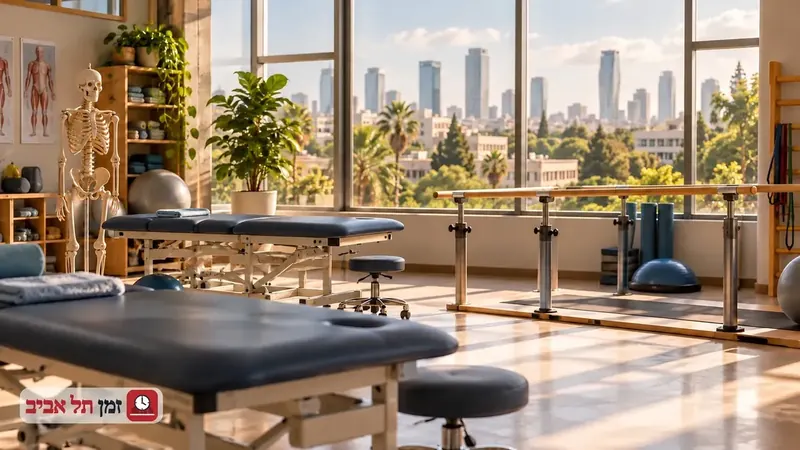
The university forecasts 5,120 new first-year students, compared with 4,652 a year earlier, an increase of about 10%. For the campus in northern Tel Aviv, the expansion is already affecting teaching arrangements: additional equipped rooms have been prepared for physiotherapy students.
The figures describe expectations for the 2026/27 academic year. They are not a completed opening-day headcount, and the different totals in the announcement refer to different student populations.
What the headline figure includes
The 25,500 forecast covers bachelor's and master's degrees. The university describes this as the largest combined total recorded at an Israeli university, a comparison that should be understood as its own claim.
Elsewhere in the release, the institution refers to approximately 30,000 students across its wider degree population. That figure is not interchangeable with the bachelor's-and-master's forecast. Presenting both as measurements of the same group would create a misleading picture of the intake.
The first-year total is a separate measure again. Its increase from 4,652 to 5,120 indicates the expected size of the incoming group, rather than the growth rate of every degree programme.
Demand for therapeutic studies rises
Physiotherapy recorded the sharpest increase among the therapeutic subjects listed, with demand up 32.7%. Social work followed at 18.6%, communication disorders at 17.6%, psychology at 7.1% and occupational therapy at 5.9%.
These percentages measure demand for study, not the number of students ultimately enrolled. A larger pool of prospective students can coexist with limits on teaching capacity, so the percentages should not be read as equivalent increases in class sizes.
The university connects the pattern to wartime rehabilitation needs. That is its explanation for the change in interest; the announcement does not establish the individual motivation of every applicant.
Where teaching capacity is expanding
In physiotherapy, the university says it has increased the incoming class to approximately 120, from fewer than 100 previously. Additional rooms with equipment suited to the discipline were needed to accommodate that expansion.
Social work is also expecting about 120 new students, compared with 105 in the previous academic year. The similar totals belong to two separate programmes and should not be combined into a single admissions figure.
The distinction between demand and capacity is particularly visible here: the announcement supplies both a percentage increase in interest and a separate expected intake. The new places are a concrete training response, while the demand figures describe the pressure on admissions.
Humanities and social sciences also grow
The projected intake is not confined to therapeutic fields. The university expects 759 new humanities students and 1,457 new social-sciences students.
Its charts compare different groups and academic years. Readers should therefore avoid treating every percentage in the release as a year-on-year comparison. The most useful figures for understanding the coming intake are the expected numbers themselves, alongside a clearly identified comparison year where one is supplied.
Rector Professor Noga Kronfeld-Shor presents the expansion as both an expression of confidence in the university and a responsibility toward students and society. The practical test for the institution is delivering the education attached to those additional places.
What prospective students should check
The announcement is not an invitation to assume that applications remain open. According to the university, registration for some competitive programmes had closed three to four months before the academic year, while demand for engineering, technology and medicine remained high.
Applicants should check the status of their specific programme and their own admissions correspondence. Existing students should use their departmental information for teaching arrangements rather than infer timetable changes from the overall enrolment forecast.
The next meaningful comparison will be between these forecasts and the intake actually recorded. For now, the confirmed development is the university's published plan for a larger student body, including an expansion of training capacity in two therapeutic disciplines.